


How the inflation crisis is impacting retail industries in the UK
In 2022, the United Kingdom had its fair share of economic turmoil. With the economy licking its wounds from the impact of Covid-19, and the far-reaching consequences of Brexit, the Russian-Ukraine war couldn’t have come at a worse time. The disrupted supply chains across Europe caused energy prices to fly through the roof and culminated in an inflationary tide throughout Britain like never before.
In October 2022, UK inflation reached a 41-year high of 11.1%. Faced with skyrocketing production costs, numerous businesses are being forced to rely on price hikes just to stay afloat. Additionally, the increase in cost of living is changing the way customers are shopping and spending. Many people now run tighter budgets, thereby reducing optional purchases and impulsive buying. As a result, retailers are seeing a decline in demand, and are forced to fight back or run out of business. This article dives deep into how companies throughout Great Britain – particularly those in retail industries – are managing this unprecedented economic challenge.
What is Inflation? What’s the cause in the UK?
Inflation measures the rise of goods and services, and is often tracked by Consumer Price Index (CPI). The CPI is a crucial pointer of the economy’s process of steadiness, measuring the average changes in prices over time of goods and services bought by consumers. As prices go up, the purchasing power of businesses and consumers reduces, meaning they get little, compared to what they used to for the same amount of money. This culminates in a rise in the cost of living.
Since early 2021, the cost of living in the UK has been increasing. According to the CPI, consumer prices were 10.7% higher in November 2022 than the previous year. The UK currently has the fastest inflation rate of any G7 country, with the CPI at its highest since the 1980s.
The Office of the National Statistics (ONS) said the CPI rose by 10.7% in 2022 to July, up from a reading of 9.4% in June and entering twice the figures at an earlier stage than expected. The last time the figure was higher was in February 1982. This was only the 4th time in 70 years that inflation breached the 10% threshold.
What caused inflation in the UK?
Several factors resulted in inflation in the UK. Let’s start with the Russian-Ukraine war. Russia’s invasion of Ukraine caused a supply chain cut globally and hampered the supply of gas and the production of agricultural raw materials. The difficulty in moving supplies around the world inevitably resulted in a hike food prices. The boycott of Russian gas by major consumers globally and the sub-optimal production of agricultural materials in particular have suffocated access to raw materials. As a result, the costs of production have tremendously increased for several businesses.
Covid-19 is another major cause of the inflation in the UK. With productions across several industries in the country below optimal level, the repercussions of the unprecedented virus have been heavy on the demand-supply dynamics, as supply badly struggles to meet demand.
Inflationary pressures have also mounted due to Brexit which has left the workforce in the country frail. The exodus of the European working population out of the UK has caused a deep lacuna in the skilled and unskilled labor force, and has ultimately undermined supply volume in industries across the country.
For business owners, inflation can be frustrating. Not only does it result in less profits for you, but every pound you make is less valuable than the day before.
Theoretically, inflation is an interplay of a demand and supply curve between consumers and suppliers, which has now become hugely misaligned due to the pandemic.
As said earlier, increased prices lowers customer sentiment and discretionary spending. As prices rise and consumer pounds lose value, the demand for goods naturally weakens. Consumers are likely more interested in the value of their existing cash and covering their daily expenses and debts rather than splurging or investing in unnecessary items. Naturally, this is negative news for retailers, leading to a loss in revenue.
Additionally, the soaring cost of food items such as cereals and bread, dairy and vegetables, has led hotels and restaurants to raise the price of their services. Other businesses are not left out due to the rise in price of other staple items like toilet rolls, pet food, deodorants and toothbrushes.
Speaking on how inflation is affecting sales in the UK, the CEO of Afromart Mini Market Limited, Enfield Edwin Apau Frimpong, said the costs have gone up massively while sales have halved. He continued, “I cannot afford to increase wages of my employees and with the cost of living on the increase, their disposable income is diminished”. Mr Frimpong thinks the country’s road to economy recovery will be long as he describes it as a “long and curved tunnel”.
According to Retail Economics, Food and Grocery retailers are reporting extensive changes in the attitude of shoppers, like shifting to their own/private brands, the decline in basket size, and switching to discounters.
For the Health and Beauty sector, Retail Economics stated that the Beauty sector performed less compared to the health sector, “with trading down evident amongst those consumers that are spending.”
How can UK retail businesses keep up during inflation?
Retailers must regard the present realities of record inflation and devise solutions to sustain their businesses, ensure long-term growth and retain their customers.
Retail Economics suggested maximising sales amid the falling demand and unnecessary incomes. Retailers need to implement sophisticated strategies that promote the right products, calculate appropriate levels of discounting and identify the best channels to engage with different customers.
Experts have also suggested ways retail businesses can manage during inflation. One such way is to leverage more digital sales channels. This is because most consumers’ first research begins in a digital space, whether they want to shop in a physical space or online. Digital sales, according to them, have enabled retail businesses to thrive without having to visit their stores.
This school of thought furthermore said if the retail industries don’t have control over inflation, they can check out their operations and find ways to avoid waste and work efficiently, adding that streamlining their sales and inventory is essential. They have said many retail businesses do not know their inventory, which, along with inflation, can be detrimental to their growth.
Additionally, customer satisfaction is very crucial. Excellent customer service is critical in retailers’ brand loyalty and affinity. Moreover, as economic decline comes to the fore, the struggle for the loyalty of customers should grow.
Speaking on how he intends to sustain his business to outlast the inflation, Mr Frimpong identified strategic partnership with key suppliers and “going online to tap on the wider market” as the solutions.
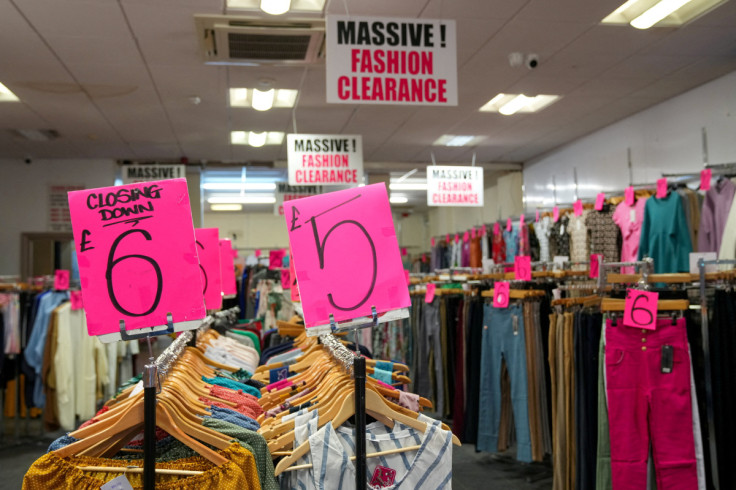
Modern Retail, a media brand covering the ins and outs of the reinvention of the retail industry, revealed that retailers in the UK are encountering a harsh economic environment, as people in their primary markets reduce spending and as trade in European markets grows more difficult due to Brexit. American shoppers’ spending power and market size have become more attractive for UK retailers, who are continuously opening up stores and collaborating with US retailers.Carina Perkins, Senior Analyst of Retail and E-commerce at Insider Intelligence, said, “The US is obviously a very attractive market size and although the US is suffering economically, I think it’s not having quite such a bad time as the UK and the rest of Europe.” Perkins said UK retailers must contemplate the buying patterns of American shoppers. She further stated that US shoppers are likely to buy in bulk, but UK shoppers tend to procure items in minimum quantities.Modern Retail explained that UK retailers are using sales ad campaigns to empty their inventories. According to them, River Island and Marks and Spencer, among others, have been granting discounts, ranging from about 20% to 30%.
What is the Bank of England doing to help minimise inflation?
The Bank of England stated that it is their job to make sure there is a decline in inflation, and the target they are working with is 2%. After that, they plan on raising interest rates to minimise inflation.
The Bank said, “We set the UK’s key interest rate – Bank Rate”, popularly known as the Base Rate. But, according to the Bank of England, the bank rate affects many other rates in the UK, including those that people might have for loans, savings or mortgages.
On December 15, 2022, the Bank of England increased their interest rate- Bank Rate – by 0.5% to 3.5%. This means some businesses will face increased loan rates, and many will experience increased borrowing costs.
Source: Ibtimes